
Article: On opals, October, and the quiet art of listening

On opals, October, and the quiet art of listening
By the time an opal gets to my bench, it has already had quite a life.
We're talking millions of years underground. Formed slowly, in the dark, under a kind of pressure most things wouldn't survive. And when it finally gets pulled from the earth and lands in front of me, it doesn't give much away at first. It just sits there. Waiting.
I find that kind of reassuring, honestly.
What the Cutter Knows
Before I ever touch a stone, someone else has already spent a lot of time with it.
The cutter's job is not to decide what shape the opal should be. It's to figure out what shape it already wants to be. They work slowly, watching as the colour shifts, as a pocket of fire opens up, as the depth reveals itself. The final form follows what the stone is showing, not what the cutter had in mind.
You can't force an opal. If you try, you lose the best part of it.
I think about that a lot.
What I Do With What I'm Given
When a stone arrives at my bench, I do the same thing the cutter did. I look at it for a while. I hold it under different light. I watch where the colour moves and where it goes quiet.
And then I build around what's already there.
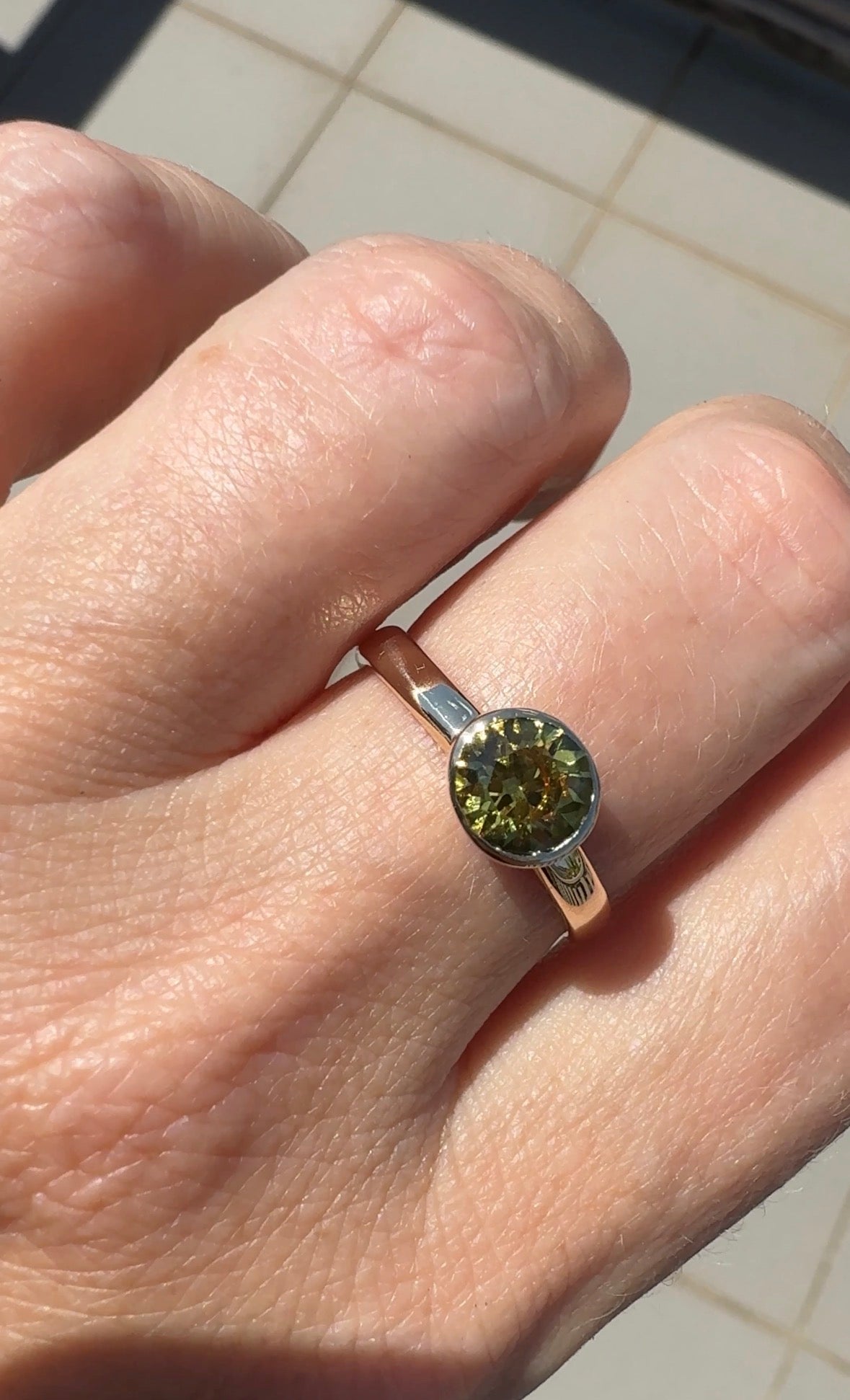
The setting is always minimal, because it has to be. The stone is the point. The metal is just there to hold it safely and get out of the way. The orientation, whether the stone sits east-west, at an angle, close to the face, comes from the stone itself, not from a plan I had before I picked it up.
It sounds simple. It's actually the hardest part of what I do. Restraint usually is.
The Thing About October
I'll be honest, I'm not really a "birthstone guide" kind of person.
But opals are different. Opals I will talk about all day.
October's birthstone is the only gemstone that holds every colour at once. It doesn't commit to one. It shifts depending on the light, the angle, the time of day. What you see in it at 8am is genuinely not what you see at dusk. It is physically incapable of being the same twice.
That's not a quirk. That's the whole character of the stone.
And if you've always been drawn to opals, I'd be willing to bet that's not a coincidence.

Leave a comment
This site is protected by hCaptcha and the hCaptcha Privacy Policy and Terms of Service apply.